Select Program
Child Protection
Education
Emergency Response
Youth Development
Health & Nutrition
Food Security
Climate Action
Child Sponsorship
Early Childhood Development
Localization
Environmental Sustainability
Select Type
Capacity Statement
Case Study
Manual, Toolkit or Guide
Policy Brief
Project Brief
Report
Research
Select Year
2024
2023
2022
2021
2020
2018
Select District
Agago
All Districts
Amuria
Busia
Dokolo
Gulu
Kaberamaido
Kapelebyong
Katakwi
Kitgum
Kole
Kwania
Lira
Obongi
Serere
Soroti

2024

ChildFund believes that by acting in partnership, we can achieve long-term sustainability of social impact and programs to have a multiplier effect on society—reaching marginalized and vulnerable children directly, but also involving parents and other civil-society actors and organizations who are responsible for child development and upholding child rights. As such, we currently implement our activities through and with over 200 local partners in 23 countries of Asia, Americas and Africa.

ChildFund protects children from violence and abuse through community-led, school-based and policy-level interventions. It supports communities to identify and address child protection risks using local resources and enables children to monitor protection systems through Child-Friendly Accountability. In schools, it promotes violence prevention through socio-emotional learning and self-protection. ChildFund also tackles violence using Start Awareness Support and Action and Male Action Groups and provides psychosocial support through trained community members, child-friendly spaces and mental health referrals. Its advocacy work pushes for stronger policies and increased funding for child protection at all levels.

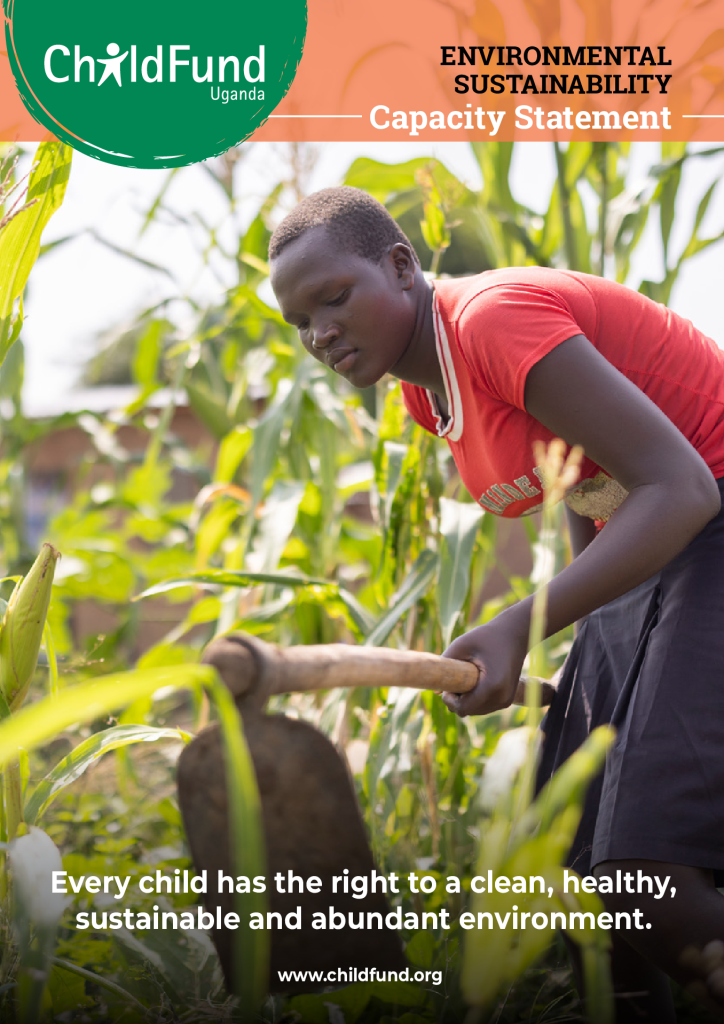
ChildFund recognises that environmental changes are not only ecological challenges but also a serious child rights crisis, directly threatening children’s survival, development and future. We implement child-centred, environmental resilient programs aligned with Uganda’s Nationally Determined Contributions and National Adaptation Plan.

2022

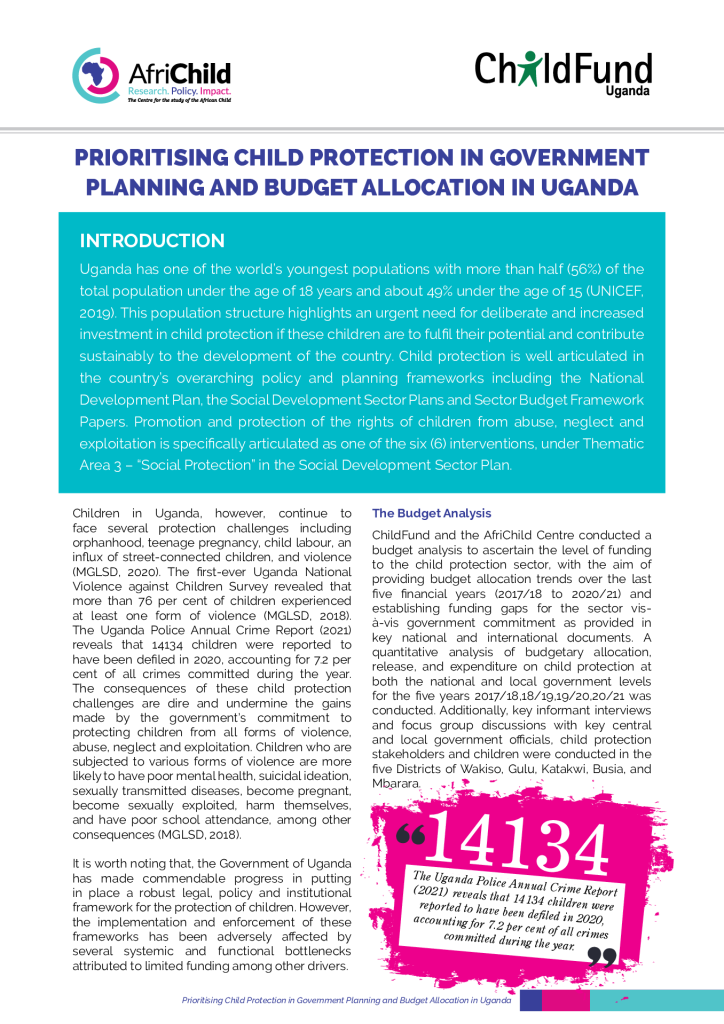
This brief assessed funding trends and gaps in Uganda’s child protection sector from FY 2017/18 to 2020/21. The study combined national and local-level budget data with insights from government officials, child protection stakeholders, and children across five districts: Wakiso, Gulu, Katakwi, Busia, and Mbarara.

2020

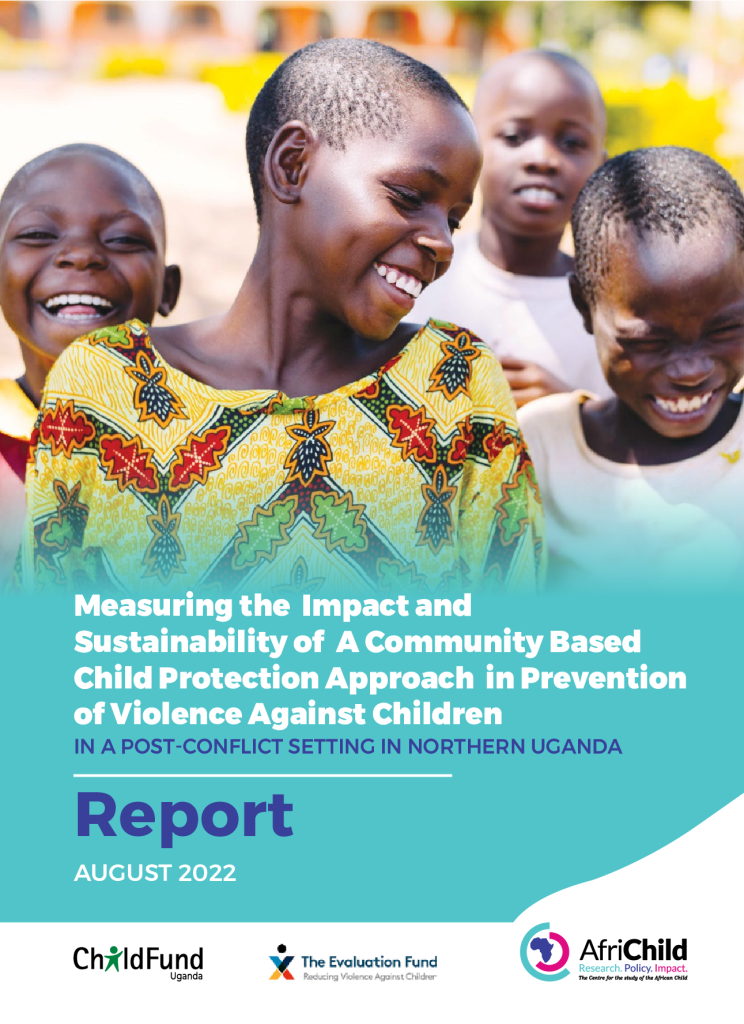
This report presents the impact evaluation of the ‘Empowering Communities to Protect Children’ project implemented by ChildFund in Kitgum District, a region still recovering from the effects of a 20-year armed conflict. The project aimed to prevent violence against children by strengthening community-based child protection systems, improving service access, enforcing child protection laws, and empowering children as change agents.

2023

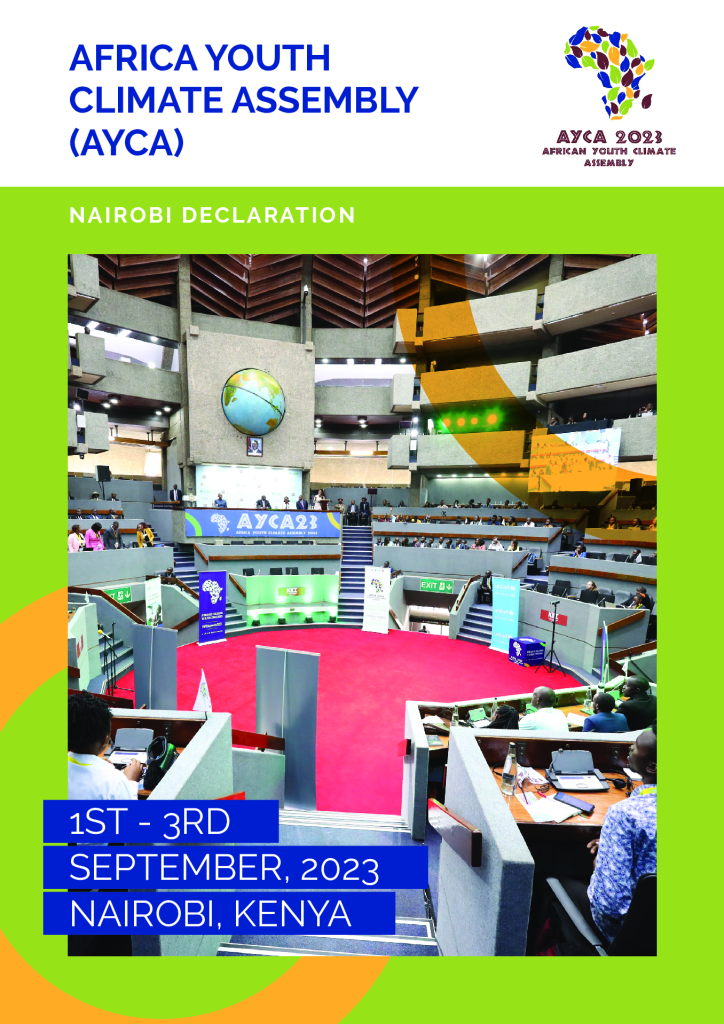
This Declaration sets out the ambition of the Africa Youth Climate Assembly as a precursor to the inaugural African Union Heads of State and Government Africa Climate Summit (ACS) with the outcomes of the Assembly feeding into the African Heads of State and Government Nairobi Declaration in 2023.

2020

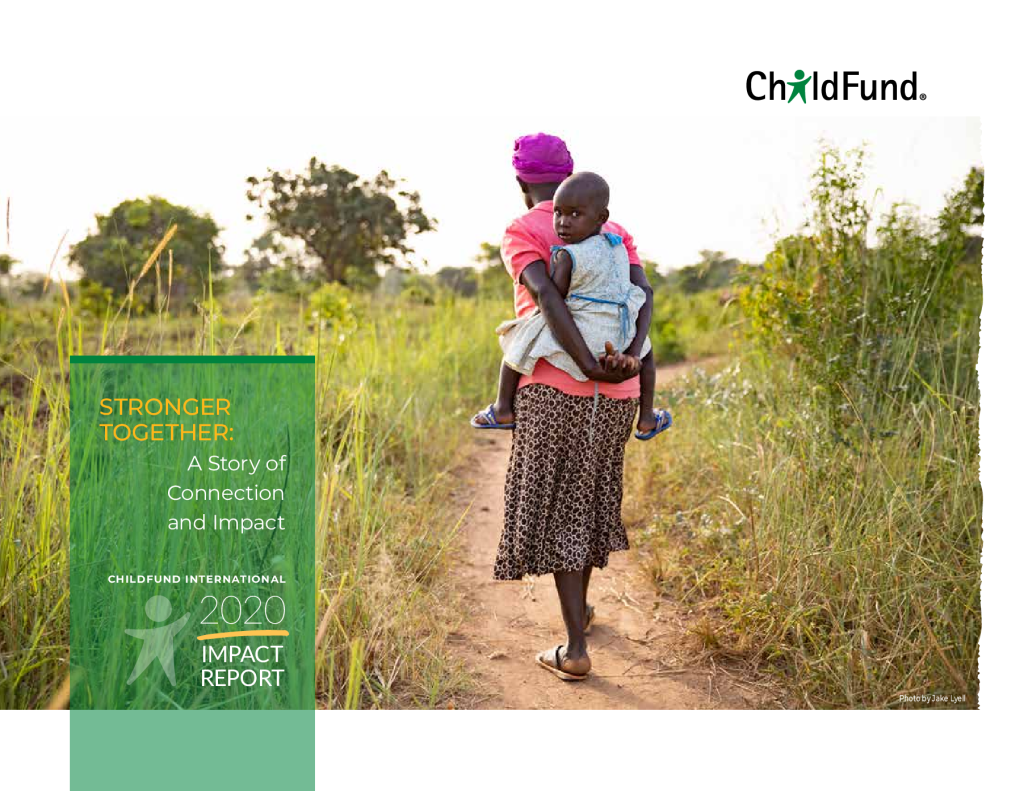
At ChildFund, we characterize our impact in Africa, Asia, and the Americas using four key dimensions: (1) the positive change we see in our core outcomes as measured by performance data — our global monitoring of key indicators and our programming evidence; (2) by the feedback we receive from children, families, sponsors, partners, and stakeholders on how our work with them has made a positive difference in their lives — and in their communities; (3) how we apply learning about what works well and does not work well in our programs and strategies to improve outcomes; and (4) how we contribute to global, collective outcomes for children and their families — the Sustainable Development Goals (SDGs).
2022

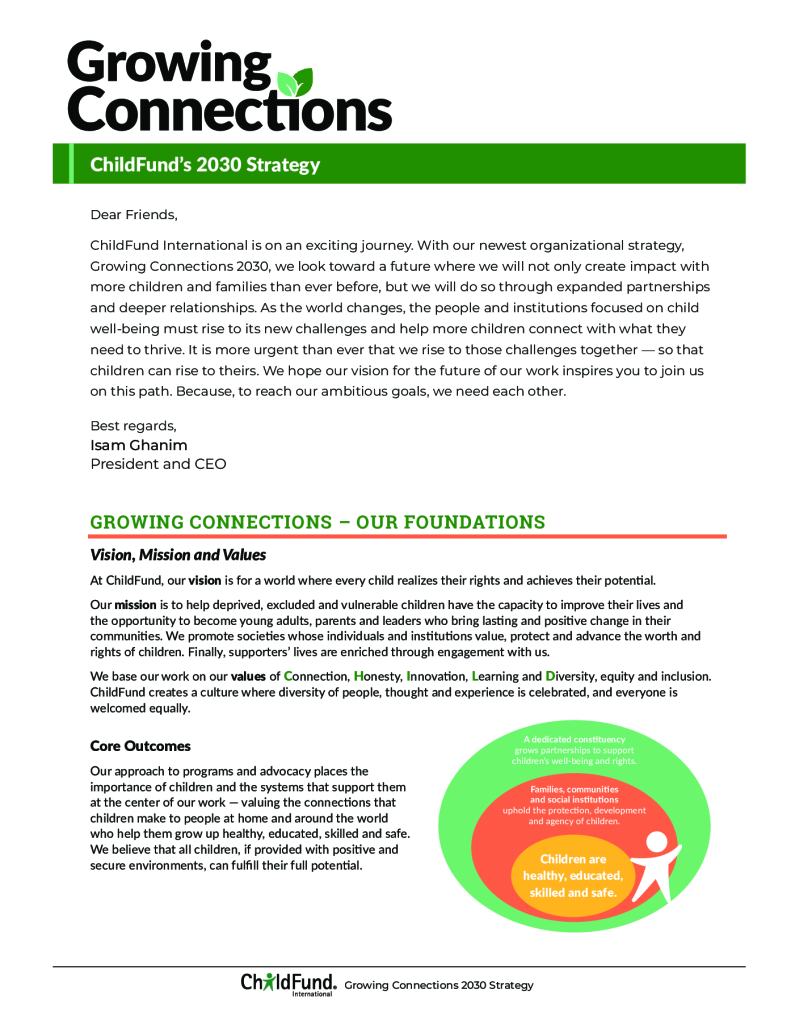
ChildFund International is on an exciting journey. With our newest organizational strategy, Growing Connections 2030, we look toward a future where we will not only create impact with more children and families than ever before, but we will do so through expanded partnerships and deeper relationships. As the world changes, the people and institutions focused on child well-being must rise to its new challenges and help more children connect with what they need to thrive. It is more urgent than ever that we rise to those challenges together — so that children can rise to theirs. We hope our vision for the future of our work inspires you to join us on this path. Because, to reach our ambitious goals, we need each other.