Select Program
Child Protection
Education
Emergency Response
Youth Development
Health & Nutrition
Food Security
Climate Action
Child Sponsorship
Early Childhood Development
Localization
Environmental Sustainability
Select Type
Capacity Statement
Case Study
Manual, Toolkit or Guide
Policy Brief
Project Brief
Report
Research
Select Year
2024
2023
2022
2021
2020
2018
Select District
Agago
All Districts
Amuria
Busia
Dokolo
Gulu
Kaberamaido
Kapelebyong
Katakwi
Kitgum
Kole
Kwania
Lira
Obongi
Serere
Soroti

2018

The Uganda Violence Against Children Survey provided critical national and regional data on children’s experiences of violence to guide targeted policy and programming. Conducted with over 5,800 respondents, the survey offered insights into the prevalence, nature and impact of violence against children, thanks to a broad partnership led by the Ministry of Gender, UBOS, ChildFund, AfriChild and other key stakeholders.

2023

This report highlights the impact of the 1 year and 10 months BRePS project, which strengthened community-based child protection mechanisms in Palorinya refugee settlement, reaching over 6,000 individuals and improving access to child-friendly spaces, child protection services and psychosocial wellbeing. Notably, reporting of child protection cases rose from 52.8% to 61.4%, and community capacity to identify, report, refer, and follow up on risks significantly improved. The project also led to a rise in children reporting feeling safe "all the time" from 7.1% to 24.2%, with increased community knowledge of safeguarding policies and greater collaboration among child protection actors.
2021

This report evaluates the outcomes of the Child-Friendly Accountability (CFA) project supported by the OAK Foundation between 2019 and 2021, under the broader goal of advancing Sustainable Development Goal 16.2. Led by ChildFund Alliance and implemented in 10 countries, including Uganda, the initiative sought to empower children to engage with decision-makers, strengthen their understanding of child rights and protection systems and improve data sharing through a centralized web-based platform.

ChildFund protects children from violence and abuse through community-led, school-based and policy-level interventions. It supports communities to identify and address child protection risks using local resources and enables children to monitor protection systems through Child-Friendly Accountability. In schools, it promotes violence prevention through socio-emotional learning and self-protection. ChildFund also tackles violence using Start Awareness Support and Action and Male Action Groups and provides psychosocial support through trained community members, child-friendly spaces and mental health referrals. Its advocacy work pushes for stronger policies and increased funding for child protection at all levels.

2022

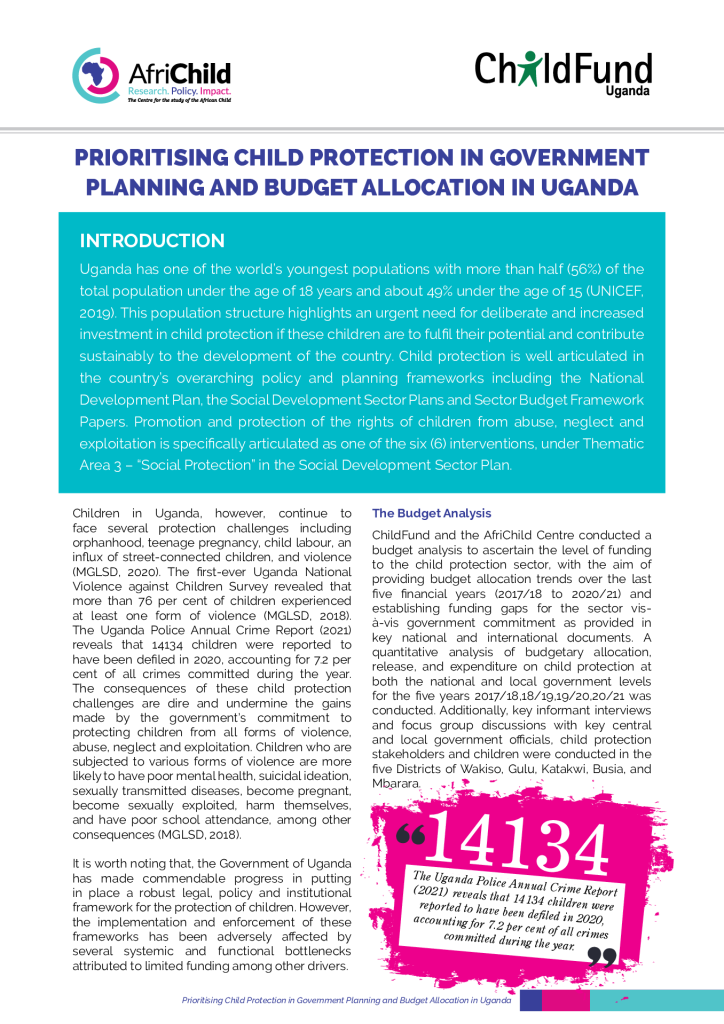
This brief assessed funding trends and gaps in Uganda’s child protection sector from FY 2017/18 to 2020/21. The study combined national and local-level budget data with insights from government officials, child protection stakeholders, and children across five districts: Wakiso, Gulu, Katakwi, Busia, and Mbarara.

2020

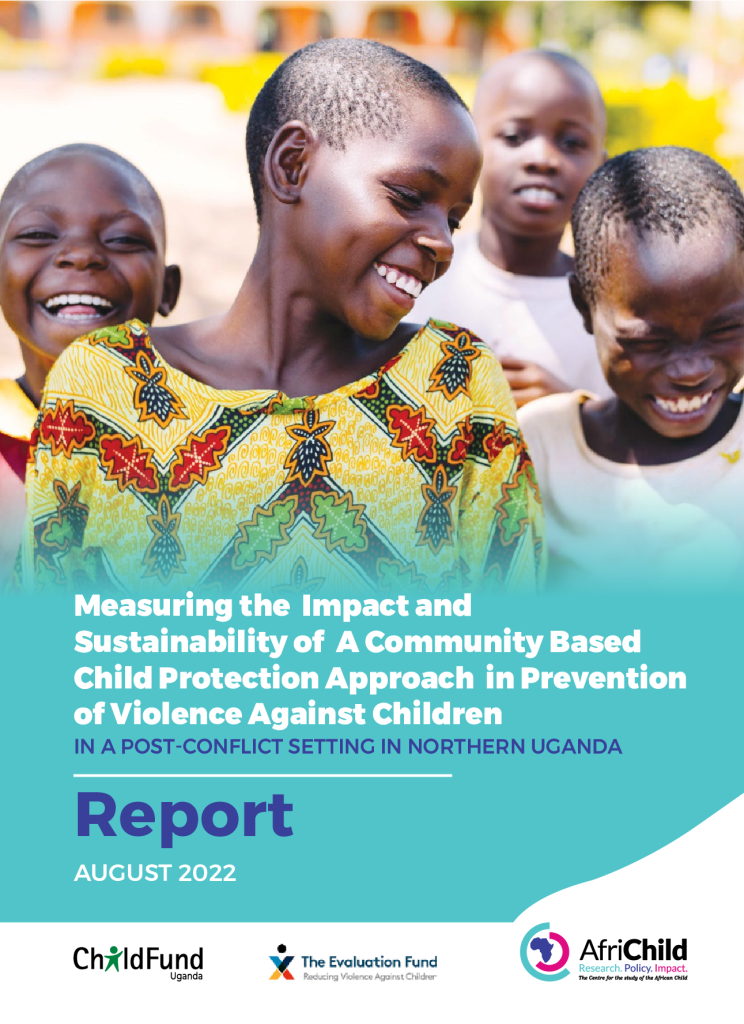
This report presents the impact evaluation of the ‘Empowering Communities to Protect Children’ project implemented by ChildFund in Kitgum District, a region still recovering from the effects of a 20-year armed conflict. The project aimed to prevent violence against children by strengthening community-based child protection systems, improving service access, enforcing child protection laws, and empowering children as change agents.

2023

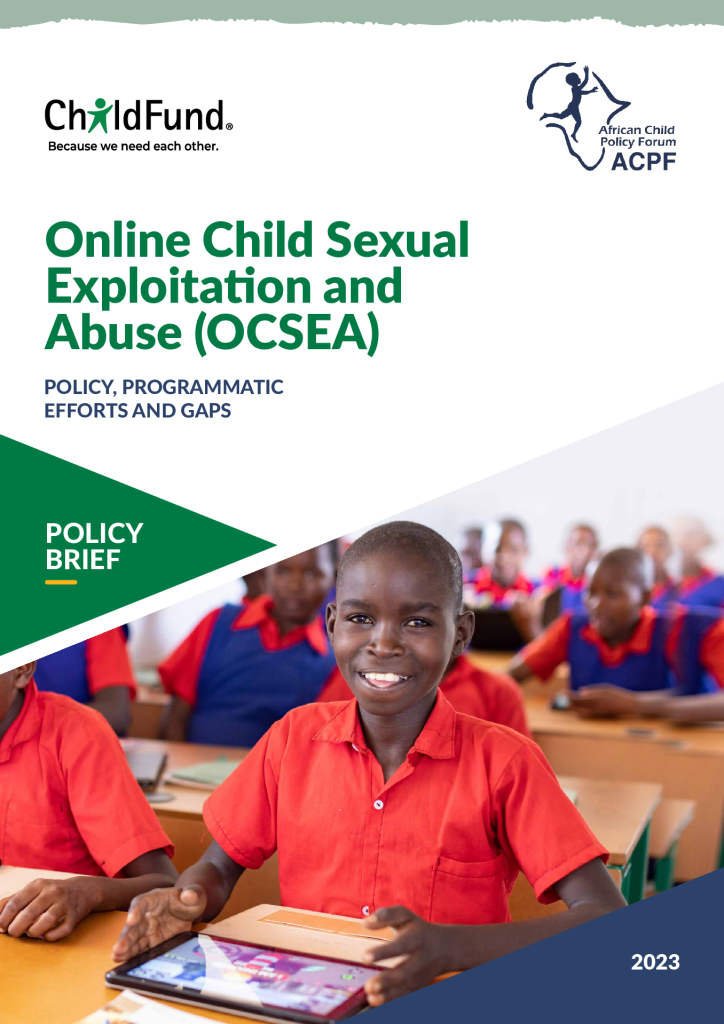
This brief focuses on policy measures and gaps in policies, legislations and standards, governance structures and coordination and programmes and services related to online sexual exploitation and abuse of children in Africa, including Uganda.

2023

This Policy Brief, prepared by ChidFund, in collaboration with the African Child Policy ForumInternational, is a succinct summary of two extended policy briefs on the scale, drivers and impact of online sexual exploitation and abuse of children and programmatic, policy efforts and gaps, respectively.